

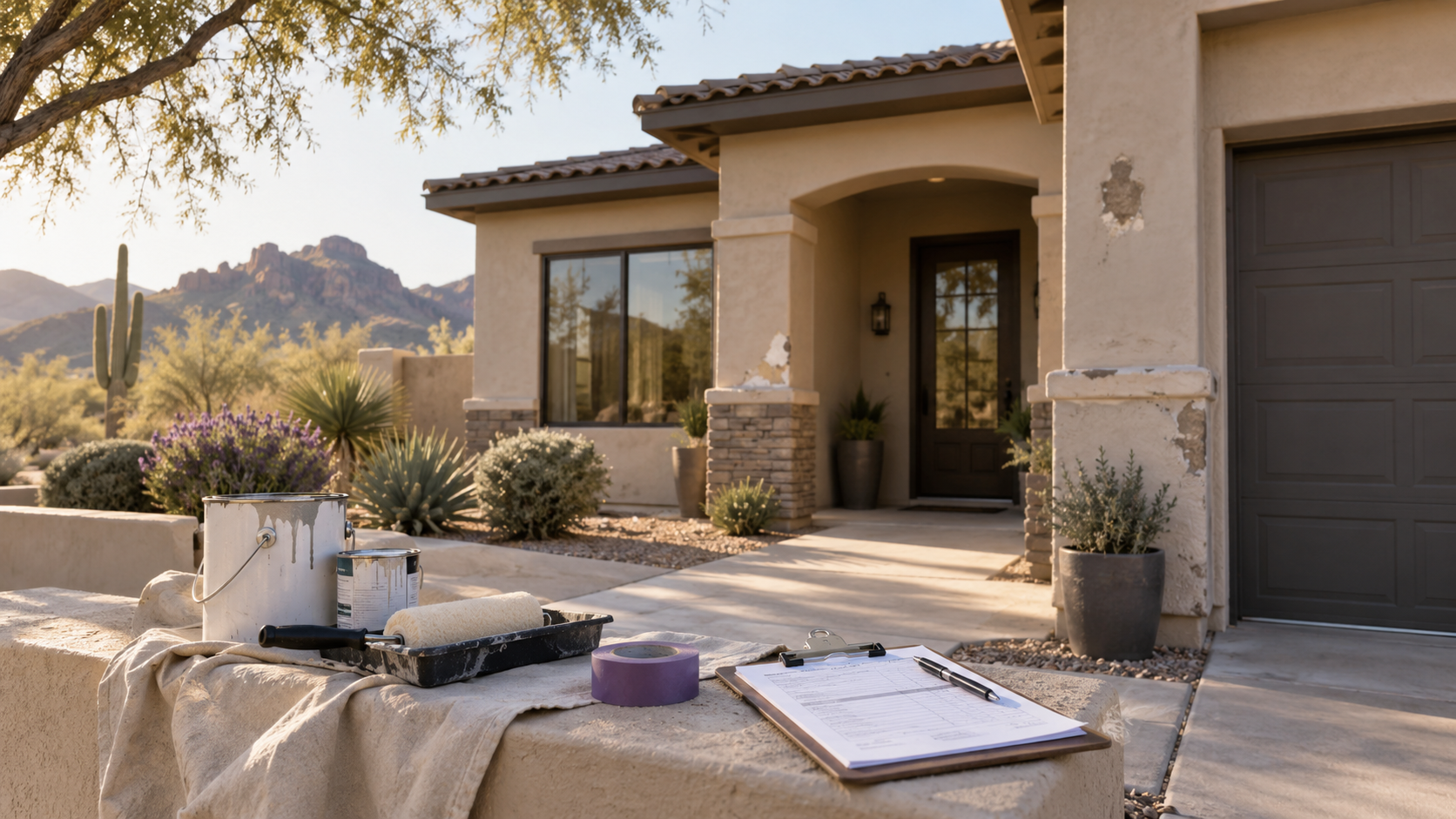
Selling your home does not always require a new kitchen, updated flooring, or a long list of repairs. Sometimes, selling it in its current condition is the right decision.
But choosing an as-is sale should be a strategy, not simply a way to avoid preparing the home. The condition of your property, your timeline, and the amount you are comfortable spending all affect which approach makes the most sense.
For Greater Phoenix sellers, the question is not just, “Should I fix it?” It is, “What work is likely to improve my outcome?”
As Is Does Not Mean Undisclosed
Selling as is generally communicates that you do not intend to complete repairs before closing. It does not mean buyers should be left unaware of known problems.
Buyers may still inspect the home, evaluate its condition, and decide whether to proceed under the terms of their contract. They may also request repairs or a financial adjustment, even when the property is marketed as is.
Clear disclosures and accurate expectations help prevent surprises. Before listing, discuss your property’s condition and your intended approach with your agent and the appropriate professionals.
When Selling As Is Can Make Sense
An as-is sale can be practical when you need to move quickly, have limited funds for improvements, or simply do not want to manage contractors.
It may also make sense for an inherited property, a home with substantial deferred maintenance, or a property where the next owner will likely renovate regardless of what you change.
Not every seller needs to maximize the purchase price at any cost. Convenience, timing, and avoiding months of additional ownership expenses can be valuable.
The important part is understanding the likely tradeoff. Buyers will consider the work involved and may adjust their offers to account for both repair costs and uncertainty.
When Small Improvements Pay
Selling as is does not have to mean leaving the home untouched.
Deep cleaning, decluttering, trimming landscaping, improving lighting, and removing unwanted items can make a noticeable difference without turning into a renovation project.
These changes help buyers understand the space and distinguish a home that needs updates from one that appears neglected.
In Phoenix, buyers may also pay close attention to HVAC equipment, roofs, pools, and signs of moisture or drainage problems. Knowing the condition of these items can help you decide whether a targeted repair is worth addressing before listing.
The goal is to spend selectively, not to make every surface look new.
Compare Net Proceeds
A higher sale price does not automatically mean a better financial result.
If you spend $30,000 on improvements and the home sells for $30,000 more, you have not necessarily come out ahead. Contractor delays, utilities, financing expenses, and additional months of ownership may reduce the benefit.
Compare three realistic options: selling in the current condition, completing light preparation, or taking on more substantial improvements.
Each option should account for spending, timing, and likely buyer response. This is especially important if you are also purchasing another home or managing a relocation.
Who Is the Likely Buyer?
A home’s condition influences who can comfortably purchase it.
Some buyers want a property they can move into immediately because their available cash is going toward the down payment and closing costs. Others are willing to update a home gradually or take on a larger project.
Investors may evaluate the property based on renovation costs and potential resale or rental value.
More significant condition issues can also affect financing or insurance, which may limit the buyer pool. Understanding those concerns before listing helps you set a realistic price and avoid spending time on offers that may not be workable.
Do Not Confuse As Is With No Strategy
An as-is property still benefits from thoughtful marketing.
Quality photos, accessible rooms, complete information, and a price that reflects the condition help buyers see the opportunity. Highlight genuine strengths, whether that is the location, layout, lot, or potential to personalize.
Buyers should be able to understand what makes the home worthwhile without feeling that important details are being hidden.
The Bottom Line
Selling as is can be the right choice, but it works best when you understand the likely costs and tradeoffs.
The Kumler Group can help you evaluate your home, identify worthwhile preparation, and compare selling strategies before you commit to unnecessary work.
Thinking about selling? Connect with our team to create a plan that fits your property, timeline, and goals.
Check out this article next