

New Build vs. Resale: Which Wins?
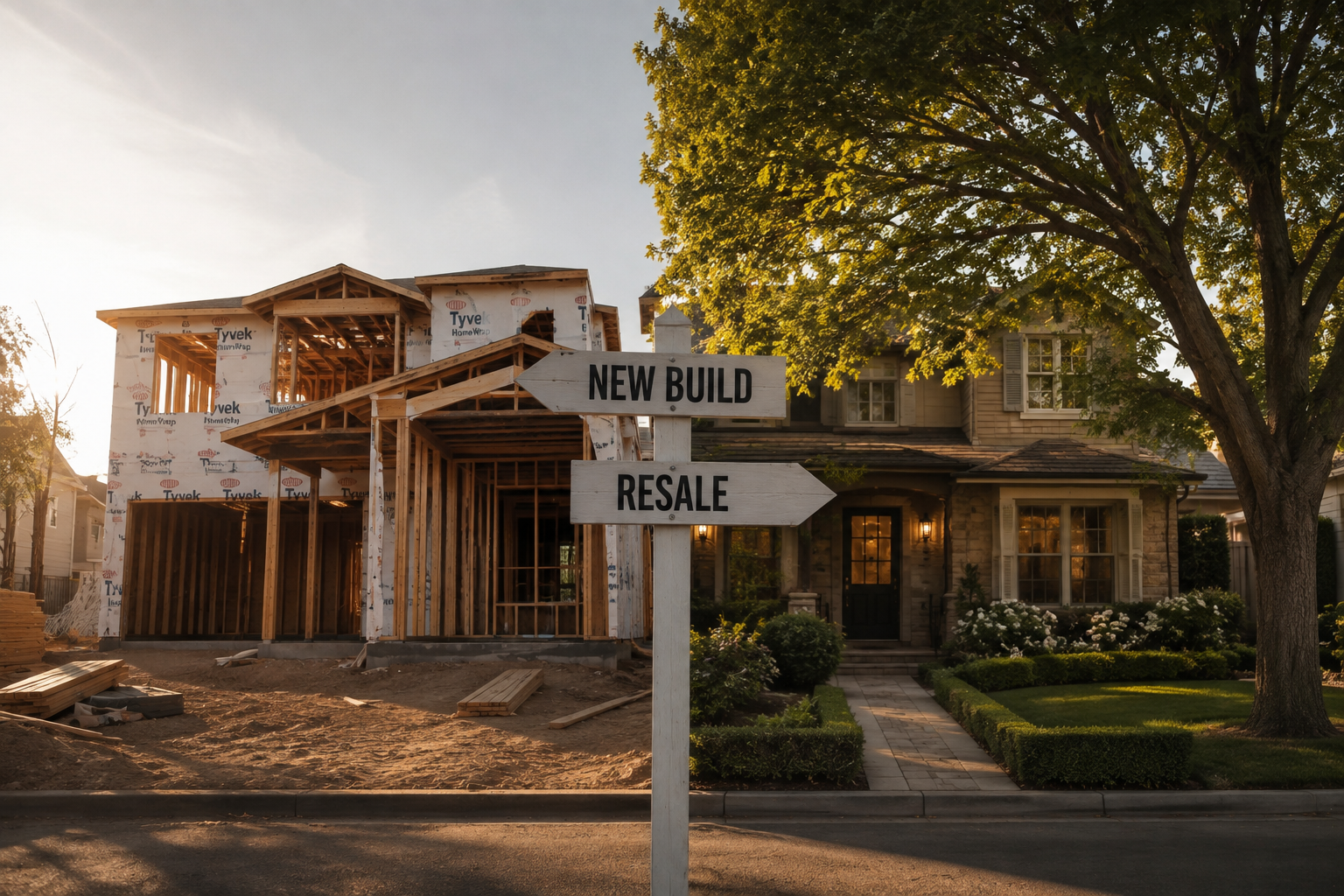
There’s something exciting about walking into a brand-new home. Everything is fresh, the finishes are current, the systems are new, and builder incentives can be hard to ignore.
Then you find a resale home in an established neighborhood with a finished backyard, mature landscaping, window coverings already installed, and a seller who may be willing to negotiate.
Suddenly, the decision isn’t so obvious.
New construction and resale can both be great purchases, but they offer value in very different ways. The real question is which one makes the most sense for you.
Why New Construction Can Win
The obvious advantage? Everything is new.
Your roof, HVAC, appliances, plumbing, electrical components, and finishes haven’t spent years being used by someone else. While new doesn’t mean maintenance-free, there may be fewer immediate replacement concerns.
Then there are the builder incentives.
Depending on the builder and community, buyers may find incentives toward closing costs, financing, rate buydowns, upgrades, or design selections. Those incentives can sometimes make a new build more competitive than its purchase price initially suggests.
And if you’re building early enough in the process, you may have the opportunity to choose certain finishes and upgrades rather than inheriting someone else’s style.
But there’s a catch.
The Model Home Isn’t Always the Price Tag
That beautiful model home may look nothing like the builder’s base package.
Upgraded flooring, cabinetry, countertops, lighting, appliances, landscaping, and structural options can quickly increase the final price.
There are also expenses buyers may not think about until after closing. A new home could still need window coverings, backyard landscaping, ceiling fans, storage, or additional upgrades.
The advertised price gets your attention. The total cost is what matters.
Why Resale Can Win
With a resale home, you can usually see exactly what you’re buying.
The neighborhood is established. The landscaping has matured. You know what surrounds the property, and many of the improvements you’d pay extra for in a new build may already be there.
A resale home could include a finished backyard, blinds, upgraded lighting, a pool, storage, or other improvements as part of the purchase.
There may also be more room for negotiation. Depending on the home and market, a seller could be willing to negotiate the purchase price, contribute toward closing costs, or address inspection items.
And when location matters, resale often gives buyers more options in established neighborhoods where new construction simply isn’t available.
What About an Older Home?
Resale comes with history, and that means condition matters.
How old is the roof? The HVAC? Have major systems been updated? Is there deferred maintenance?
This is where inspections and due diligence become incredibly important. A lower purchase price isn’t necessarily a better deal if you’re facing major expenses shortly after closing.
At the same time, an older home with updated major systems and thousands of dollars in improvements already completed could offer tremendous value.
Age doesn’t tell the whole story. Condition does.
So, Which One Is the Better Deal?
This is where buyers need to look beyond the list price.
Imagine a resale home is priced lower, but needs a new HVAC system and roof within the next few years. Meanwhile, a new build costs more but comes with a builder incentive that helps reduce your closing costs or interest rate.
Or maybe the new build looks like the better deal until you add $20,000 in upgrades and everything you’ll need to complete after closing.
The smartest comparison isn’t simply, “Which home is cheaper?”
It’s, “Which home gives me the most value for my money?”
The Bottom Line
There isn’t one winner for every buyer.
New construction may make more sense if you value newer systems, current finishes, customization opportunities, and builder incentives.
Resale may make more sense if you want an established location, included improvements, mature landscaping, and opportunities to negotiate.
The winner is the home that makes the most sense when you compare the entire deal: price, financing, incentives, condition, future expenses, location, and long-term value.
One last thing: if you’re considering new construction, remember that the builder’s sales representative represents the builder. You can have your own real estate agent representing you and your interests throughout the process.
New Build or Resale? Let’s Run the Numbers.
The right choice isn’t always obvious from the list price. Let The Kumler Group compare new build incentives, resale opportunities, and the true costs of each so you can see which option makes the most sense for you.
Ready to explore your options? Contact The Kumler Group today and let’s find out which one wins for you.
That ties directly back to the title and gives them a reason to reach out.
Check out this article next
The Costs of Buying a Home No One Talks About
Buying a home is one of the biggest financial decisions you'll ever make, and while most buyers focus on the purchase price, that's only one…
Read Article